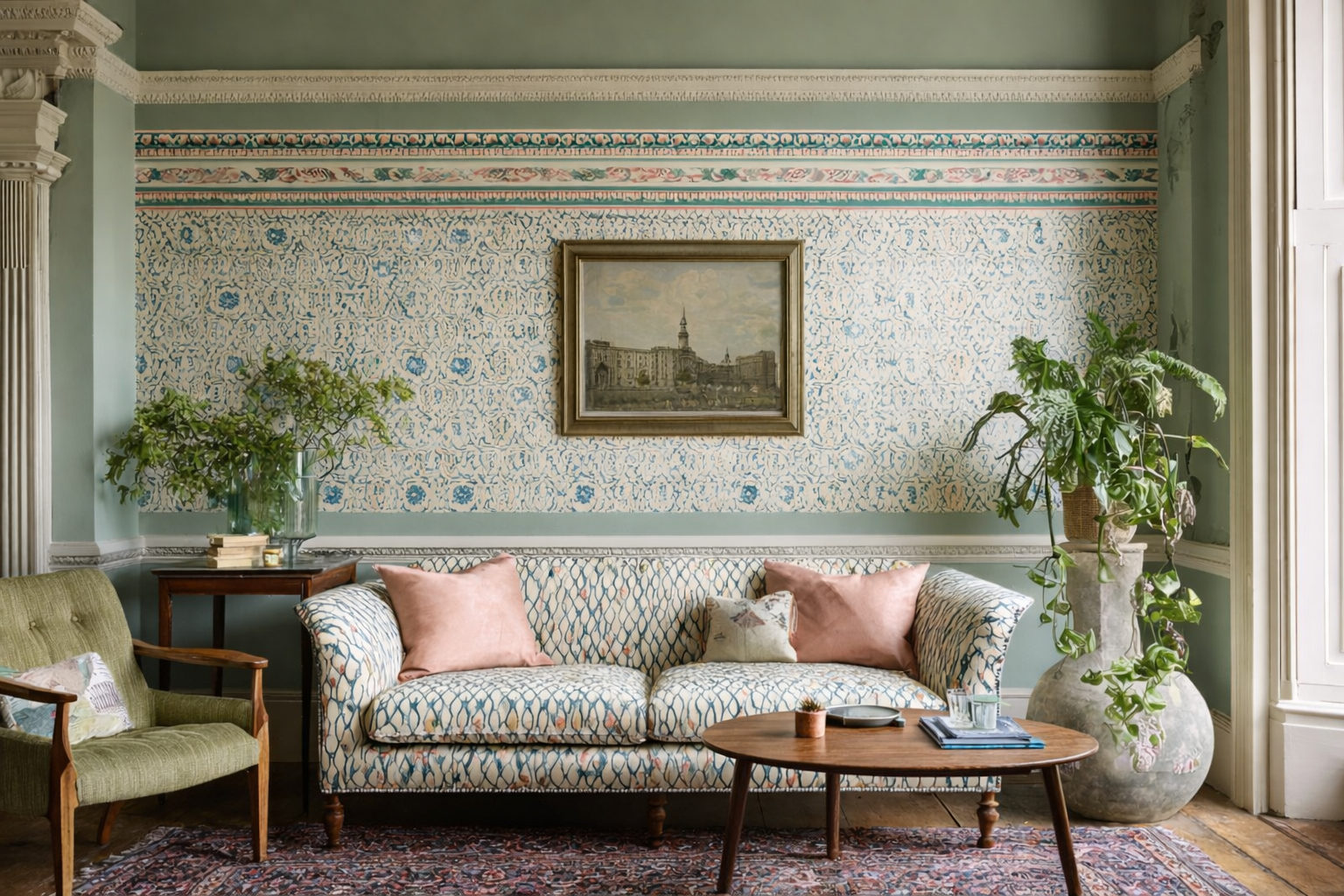
Power of Pattern Part 3: Layering with Confidence
Along with ‘colour drenching’ and other design terms slipped into our lexicon, ‘layering pattern’ can sound a little alarming, as though you’re about to slap every fabric you own into a room and create motif mayhem. Fear not. This is Part 3 of my Power of Pattern series. If you’ve followed along from the beginning, you’ll already know why pattern affects us emotionally and how to start small without overwhelm. This final piece is about what happens next: when you are confident that pattern really bring joy in your home, and you want to pull it together in a way that feels intentional rather than overdone.
Layering pattern isn’t about adding more for the sake of it. It’s about giving a room rhythm, depth and clarity, so it feels cohesive rather than busy.
Once you’ve lived with a few patterned elements – cushions, lampshades, rugs – you start to notice which types of pattern feel comfortable, and which don’t. At this stage, pattern stops feeling like a risk and hopefully starts feeling like a companion.
The aim of layering is not to add pattern everywhere for pattern’s sake, but to create a considered scheme in which the eye moves easily around the room, recognising familiar notes and gentle variations along the way. The result will be a room that reveals your personality, as quietly or loudly as you’d like.
Layering Is About Hierarchy
Successful pattern schemes rely on hierarchy. In almost every balanced room there is a clear lead pattern that anchors the space, one or two supporting patterns that echo or soften it, and quieter elements – often textural rather than motif-led – that allow the eye to rest. On the contrary, if everything competes for attention a room can feel unsettled; when each pattern has a role, the space reads as balanced, coherent and intentional.
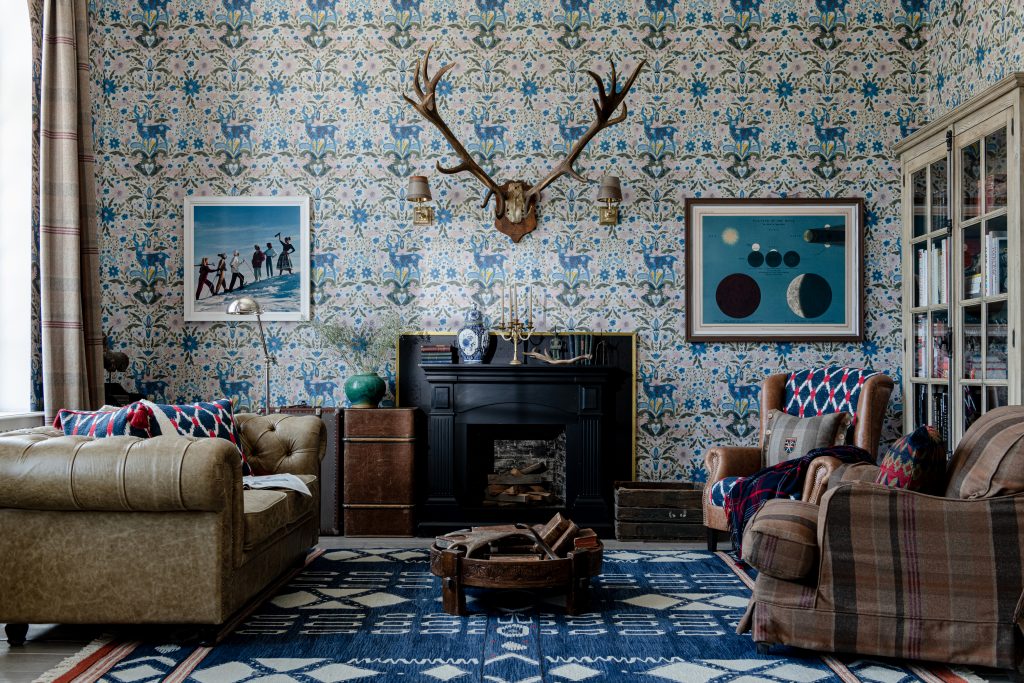
In this living room, the geometric rug draws the eye down from the striking Der Konig wallpaper by Mind the Gap, creating cohesion through colour that prevents either of them dominating. The muted brown leather and plaid textiles sit comfortably and feel familiar in this period room, creating moments of rest for the eye.
Choosing Your Anchor Pattern
Your anchor pattern is the element that carries the most visual weight in the scheme. This might be wallpaper, a large rug or patterned flooring, curtains or blinds, or larger upholstered pieces such as a headboard or sofa. Whichever form it takes, it should align closely with how you want the room to feel. Calm, classic and country spaces benefit from organic motifs, softer contrast and flowing repeats, while more energetic rooms can carry stronger geometric or larger motifs that provide a gentle drum beat of rhythm. However anchor patterns don’t need to be dramatic or bold: confident schemes can rely on relatively quiet patterns used generously on walls or window dressings for example.
Scale, Rhythm and Repetition
One of the most reliable ways to layer pattern successfully is to vary scale while repeating something familiar such as the type of pattern or colours within them. A scheme often works best when it includes a mix of large, medium and smaller-scale patterns, tied together by a shared colour, a repeated line direction, or a related motif. As I explained in the first post of the series, this gives the brain enough structure to feel settled – what environmental psychologists describe as legibility – while still offering interest, variation and a hint of mystery as the eye moves around the room.
Practical Pattern Combinations
Below are three practical combinations you can use as starting points. Each relies on hierarchy, shared colour, and varied scale.
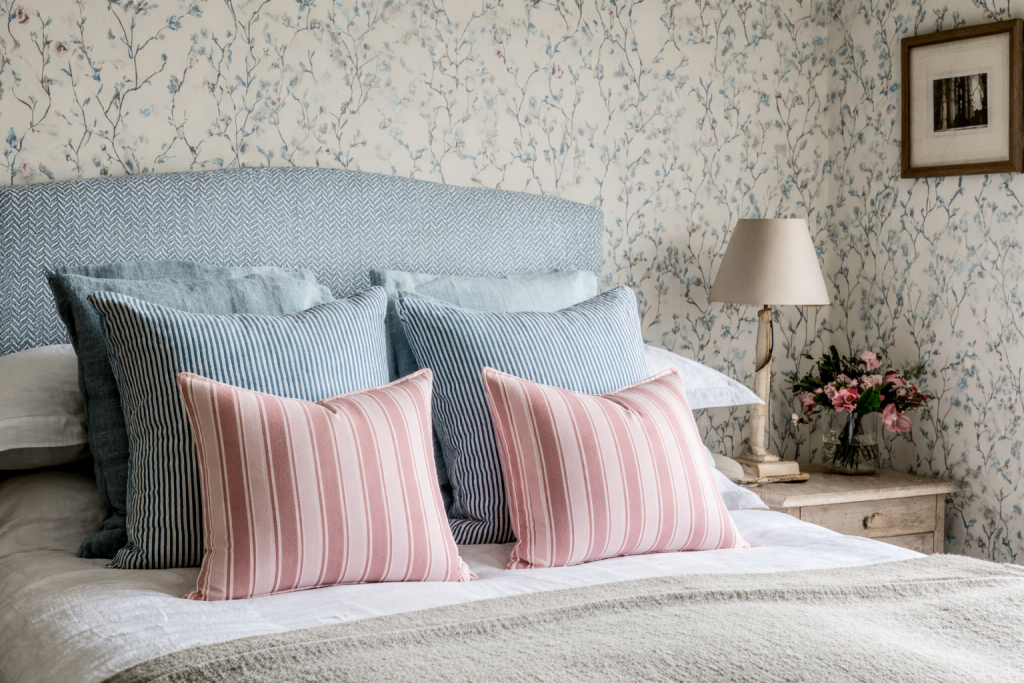
1. Botanical Calm (Bedroom or Snug)
- Anchor: A soft botanical wallpaper with a flowing repeat, in muted greens or blue-greys
- Support: Linen cushions with a subtle stripe or ticking, picking up one tone from the wallpaper
- Quiet layer: Herringbone wool throw or textured headboard fabric in a complementary hue
Why it works: the organic wallpaper sets the mood, the stripe introduces order, and the textures keep the scheme restful.
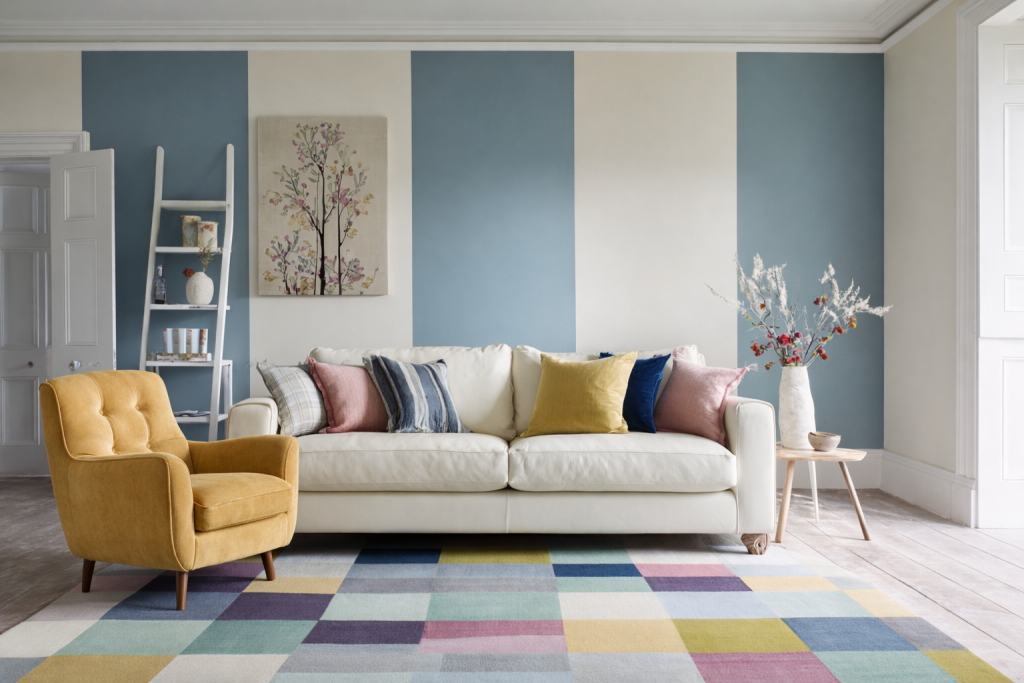
2. Softly Ordered (Living Room)
- Anchor: A patterned rug with a medium-scale geometric design
- Support: Wallpaper with a wide plain stripe
- Quiet layer: Cushions combining a smaller geometric or check with plain velvet or wool ones
Why it works: the rug grounds the room, the cushions echo its structure at a smaller scale, and the striped walls offer a simple pattern that prevents visual overload.
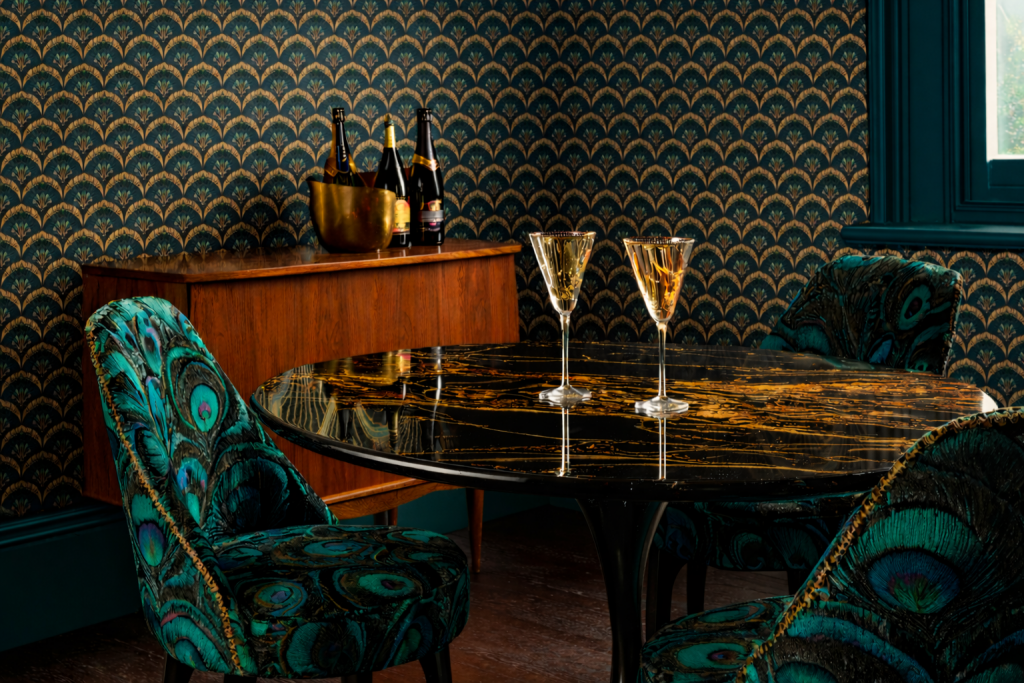
3. Decadently Distinct (Dining Room)
- Anchor: A dark and metallic mid-scale wallpaper pattern used across all walls
- Support: Upholstered dining chairs or bench cushions in a larger-scale or looser motif
- Quiet layer: A timber or marble table adding soft natural grain or veining
Why it works: the bold repeat pattern wallpaper sets the Art Deco tone, allowing equally bold accents to sit comfortably without dominating the space.
Pattern and Texture
Texture is often the softest layer of pattern that helps a room feel calm rather than busy. Natural textures especially help, since they are more ‘expected’ in our homes and provide relief and familiarity for the eye. Woven fabrics, timber grain, stone veining and soft pile textiles all introduce visual interest without demanding attention.
If a scheme feels close to being ‘too much’, adding or emphasising texture rather than another motif can bring it back to cohesion and calm, if calmness is the desired intention.
Common Layering Pitfalls
When pattern feels overwhelming, it does not always mean there is too much of it. More often, the issue is a lack of hierarchy, patterns that are too similar in scale, or an absence of quieter elements to balance the scheme.
Choosing patterns in isolation can also make them harder to bring together later. So if you’re furnishing and decorating a room, plan in advance where you want to include pattern, and only buy key elements – the wallpaper, curtains, rug or lampshades – once you’ve compared and considered them together.
A second common pitfall is choosing patterns without testing them at home. A fabric that feels gentle amongst the busy and bold samples in a fabric shop could still look quite dramatic in your calmer home. Always view samples in the actual space, at different times of day, and against the finishes they’ll sit beside. Consider how glimpses of them will look from other rooms – is there a common theme or colour that helps bind these?
Final Thoughts
Layering pattern is less about bravery and more about using this simple guidance – and your own instincts about why you love those particular choices.
When done well, pattern adds depth, warmth and personality, and that’s going to result in a room that brings you joy.
And if you’d prefer not to do all the heavy lifting yourself, this is exactly the stage where I often step in – helping clients bring clarity and cohesion to patterns they already love, so everything works together with ease. If that sounds helpful, contact me about my Power of Pattern consultations.
Categories: DecoratingPattern
jenny@kitedowncreative.com
07740 292 015
East Meon in Hampshire, GU32 1PD